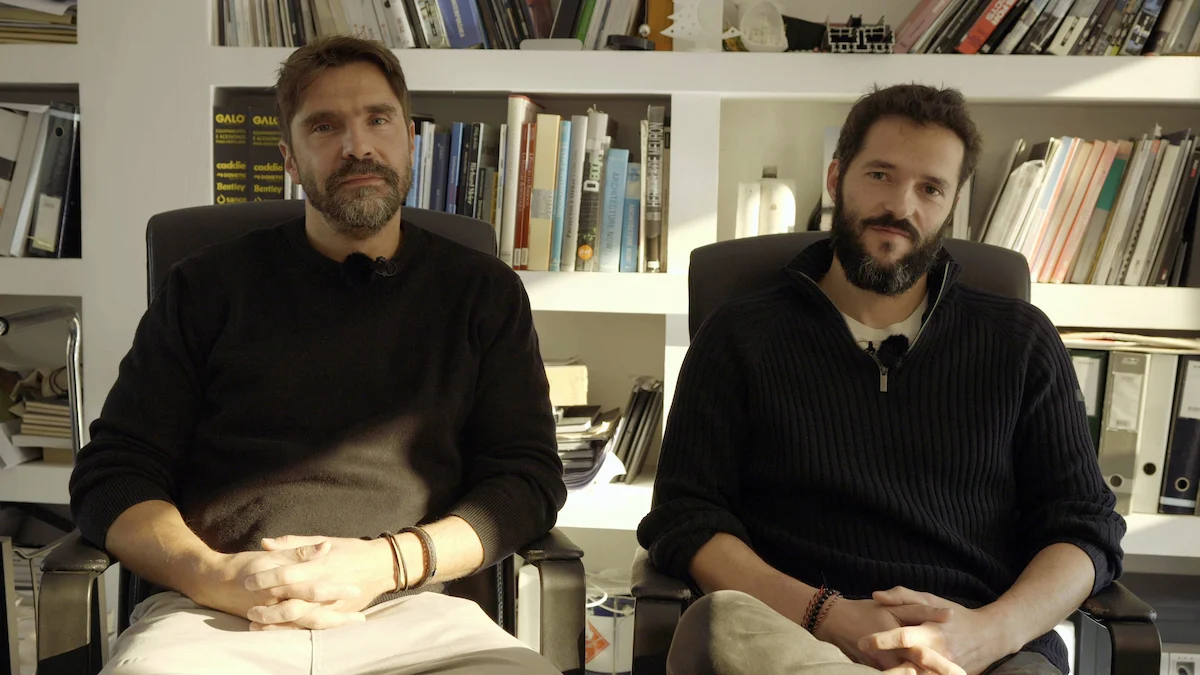
Silves Hills is designed by PAULO MERLINI architects, a Porto-based studio known for creating spaces that connect people, nature, and the environment. The principal architect for this project is Andre Silva. Founded in 2007, the firm focuses on designing buildings that respond to practical needs and human experience. Their philosophy, “US IS MORE,” emphasises how architecture should serve the way people live, perceive, and interact with space rather than follow superficial trends.
The team carefully considers natural conditions, terrain, and regulations, using these factors to inspire creative solutions. Their projects, from renovated farmhouses to modern workplaces, aim to feel intuitive, comfortable, and integrated with their surroundings. In Silves Hills, this approach guided every decision from house placement and views to sustainability and the integration of nature.
In the following Q&A, Andre Silva explains the design principles, challenges, and vision behind Silves Hills.
Interviewer: Can you explain what we’re looking at here? (They are looking at a 3D model of the site)
Andre Silva: What you see now is only part of the model. We are developing a full 3D model at a large scale, which will allow us to place the houses, infrastructure, and equipment accurately on the land. This helps us understand whether the terrain works as it is, or whether adjustments are needed. The land is very complex, but that’s what makes the project special.
Interviewer: The site has significant slopes. How did that affect the design?
Andre Silva: The entire plot is defined by slopes. From an architectural point of view, this was challenging. You may have incredible views, but placing a house on such terrain requires careful planning. Roads, access, and platforms all have to be designed intelligently. But this difficulty is also what gives architecture its value. If something is easy, it doesn’t create meaning. We believe value comes from overcoming complexity.
Interviewer: You often talk about architecture as space, not just façades. Can you explain that philosophy?
Andre Silva: Architecture should not be limited to the four façades of a building. When you create space, you work with the entire volume. We pay a lot of attention to ceilings, slabs, and upper planes because they have a strong psychological impact on how people experience space. This aspect is often undervalued, but it shapes emotion, comfort, and perception. Whether inside or outside, we always try to give the project an additional layer of meaning through these elements.
Interviewer: In Silves Hills, privacy and connection seem to coexist. What was the intention?
Andre Silva: Our main concern was to preserve nature and respect the original landscape. The buildings have only one or two floors and are integrated into the terrain. The green roofs are fundamental. Even with 154 houses, the buildings visually disappear into the landscape. You don’t feel surrounded by construction. You feel surrounded by nature. That was essential for us.
Interviewer: Sustainability clearly plays a major role in the project.
Andre Silva: Sustainability is extremely important to us, in every project we design. But sustainability is not only about the environment. It rests on three pillars: environmental, social, and economic sustainability. Focusing on only one is incomplete. When possible, we try to integrate all three. Sometimes constraints exist, but the intention is always there. We must think beyond ourselves, about the planet and future generations.
Interviewer: The architecture feels more Scandinavian than traditional Algarve. Why?
Andre Silva: We always aim to connect interior and exterior spaces. This site is extraordinary. It would make no sense to design small windows here. People today want to reconnect with nature and with themselves. Large openings allow the interior and exterior to become one. This does not contradict sustainability. If architecture is done properly, orientation, shading, slabs, and materials control heat and comfort naturally.
Interviewer: How do you manage thermal comfort with such large windows?
Andre Silva: Everything is carefully calculated. Roof slabs extend beyond the façades to control sun angles. In summer, direct sunlight is blocked; in winter, warmth can enter. Wall thickness, orientation, and materials all contribute to thermal performance. We work closely with engineers and use specialised software to balance comfort, efficiency, and openness to nature.
Interviewer: What materials are being used?
Andre Silva: The palette is simple: concrete, wood, glass, and local stone. Retaining walls will be built using stone from Silves itself. Using local materials strengthens the connection between the architecture and the landscape.
Interviewer: How did you organise the houses so they don’t overlook each other?
Andre Silva: The total plot is over 600,000 square metres, but construction is limited to around 100,000 square metres. The houses are oriented east, south, or west — never north — because of sun exposure in Portugal. We created platforms adapted to the slopes. From each house, you see the landscape and green roofs, not your neighbour.
Interviewer: The amenities are ambitious.
Andre Silva: Yes. Silves Hills will include a gym, spa, sauna, yoga spaces, restaurants, co‑working areas, small shops, viewpoints, sports facilities, and potentially even horse riding. If everything aligns — from technical approvals to client vision — it will be an exceptional project.
Interviewer: Final thoughts?
Andre Silva: This project is about balance: nature and architecture, privacy and community, openness and comfort. We truly believe Silves Hills will be something special.